Transcend vs Patriot Memory: Nvme SSDs Compared by Specs
As an Amazon Associate we earn from qualifying purchases. Links on this page are affiliate links.
This transcend vs patriot memory nvme SSD comparison looks at two distinct drives for different needs. The Transcend model uses a SATA III interface, while the Patriot drive uses PCIe Gen 3 x4. You need to check your motherboard support before buying. The Transcend is a small 2242 size with 120GB capacity. The Patriot is a standard 2280 size with 1TB capacity. Your choice depends on interface compatibility and storage requirements.
Key differences
| Aspect | Transcend 120GB M.2 2242 SATA SSD | Patriot P300 1TB PCIe 3.0 SSD |
|---|---|---|
| Interface | SATA III 6GB/s | PCIe Gen 3 x4 |
| Form Factor | M.2 2242 | M.2 2280 |
| Storage Capacity | 120GB | 1TB |
| Max Read Speed | up to 560MB/sec | Up to 2,100MB/s |
| Max Write Speed | up to 500MB/sec | Up to 1,650MB/s |
| Cache Type | SLC Cache | not listed |
Which one should you choose?
Choose Transcend 120GB M.2 2242 SATA SSD if
- You need a small 2242 form factor for compact builds.
- Your system only supports SATA III interfaces.
- You require a lower cost option for basic storage.
Choose Patriot P300 1TB PCIe 3.0 SSD if
- You need high sequential read and write speeds.
- You require 1TB of storage capacity.
- Your motherboard supports PCIe Gen 3 x4 drives.
Verdict: Choose the Transcend drive if you are limited by SATA ports or need a smaller 2242 footprint for older or compact systems. Pick the Patriot drive if you want significantly faster PCIe speeds and more storage space for modern applications.
Transcend vs Patriot NVMe Specs
Interface type
The Transcend MTS420S uses a SATA III interface, limiting it to 6GB/s bandwidth. This is a mature, widely supported standard but slower than modern NVMe drives. The Patriot P300 uses PCIe Gen 3 x4, which offers significantly higher bandwidth potential. PCIe allows for faster data transfer rates, especially during large file movements. You must check your motherboard to ensure it supports the PCIe interface for the Patriot drive. The SATA drive works in older systems that lack PCIe NVMe slots. This difference defines the performance ceiling for each product.
Transfer speed
Speed is where the gap widens. The Transcend drive reaches up to 560MB/s read and 500MB/s write speeds. These are typical maximums for SATA III SSDs. The Patriot P300 achieves up to 2,100MB/s read and 1,650MB/s write speeds. This is nearly four times faster for sequential reads. For everyday tasks like booting an OS, both feel quick. For copying large video files or game libraries, the Patriot completes the job much sooner. The PCIe interface directly enables these higher numbers, making it the clear choice for speed-focused users.
Form factor
Physical size matters for compatibility. The Transcend drive is a 2242 M.2 SSD, measuring 42mm in length. This shorter form factor fits in compact laptops and mini-PCs with specific drive bays. The Patriot P300 is a standard 2280 M.2 SSD, measuring 80mm in length. This is the most common size for desktop motherboards and modern laptops. You cannot swap them if the slot requires a specific length. Check your device manual for the supported M.2 length before purchasing. The Transcend wins for ultra-compact builds, while the Patriot fits standard systems.
Storage capacity
Capacity options vary between the two. The data lists the Transcend model at 120GB, which is quite small by today's standards. It is suitable only for a boot drive with minimal applications. The Patriot P300 is listed at 1TB, providing ample space for operating systems, games, and large files. While the Transcend page mentions other capacity options in variations, the specific model compared here is 120GB. The Patriot offers a much more practical amount of storage for general use. You will likely need to manage space carefully on the Transcend drive.
Cache and NAND
The Transcend drive uses 3D TLC NAND flash with an SLC cache. The SLC cache helps maintain higher write speeds for short bursts before slowing down. The Patriot P300 does not list its cache type in the provided data. It does mention SmartECC and NANDXtend technology for data integrity and lifespan extension. Without explicit cache details for the Patriot, we compare what is known. The Transcend’s SLC cache is a known performance feature. The Patriot’s ECC technologies focus on reliability. Both approaches aim to improve endurance and consistency.
Warranty support
Manufacturer support differs in length. The Transcend drive comes with a 3-year warranty. This is a standard period for many storage devices. The Patriot P300 includes a 5-year warranty. This provides an extra two years of coverage for potential hardware failures. A longer warranty often indicates greater confidence in the product's longevity. For users who plan to keep their system for many years, the Patriot’s longer term is advantageous. Both brands stand behind their products, but the Patriot offers more time for protection.
Which drive fits your system needs
Upgrading older laptops with M.2 2242 slots
The Transcend drive uses an M.2 2242 form factor, making it suitable for compact devices where space is limited. Its SATA III interface connects via a B+M key. You get read speeds up to 560MB/sec and write speeds up to 500MB/sec. This provides a reliable upgrade path for systems that do not support PCIe NVMe standards.
Users needing high speed and large storage
The Patriot P300 offers 1TB of storage capacity on a PCIe Gen 3 x4 interface. This allows for sequential read speeds up to 2,100MB/s and write speeds up to 1,650MB/s. It also includes SmartECC and Thermal throttling technology. These features help maintain performance and extend the lifespan of the NAND flash memory during heavy workloads.
Buyers wanting extended warranty coverage
The Patriot P300 comes with a five-year warranty. This provides longer protection compared to the three-year warranty offered by the Transcend drive. If you plan to keep your storage device for many years, the extended coverage from Patriot offers better peace of mind. You also get access to LDPC and NANDXtend ECC technology for data integrity.
The products compared
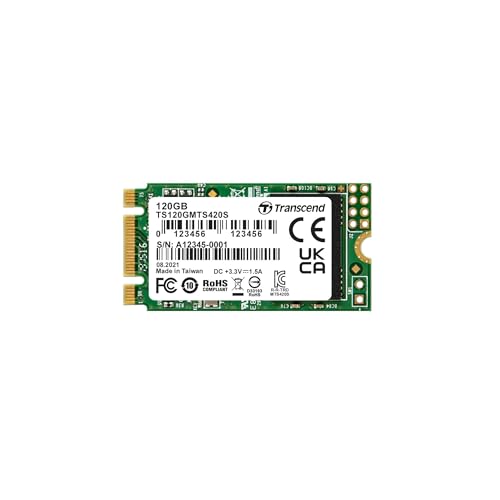
Transcend 120GB M.2 2242 SATA SSD
Best for: compact SATA upgrades with SLC Cache
- Storage Capacity
- 120GB
- Interface
- SATA III 6GB/s
- Max Read Speed
- 560MB/sec
- Max Write Speed
- 500MB/sec
- Cache Type
- SLC Cache
- Form Factor
- M.2 2242
View on Amazon: Transcend 120GB M.2 2242 SATA SSD Affiliate link
This Transcend drive uses a SATA III interface with M.2 2242 form factor. It offers 120GB of storage and includes SLC Cache for improved performance. Read speeds reach 560MB/sec and write speeds hit 500MB/sec. It is suitable for systems requiring compact storage. The drive supports standard commands like Trim and NCQ. You get a three-year warranty with this unit.
Pros
- SATA III 6GB/s interface
- M.2 2242 compact size
- SLC Cache support
- Read speed up to 560MB/sec
Cons
- Small 120GB capacity
- SATA III limits speed compared to NVMe
- Short 42mm length may not fit all slots
Good fit if
- You need a compact M.2 2242 drive
- You are upgrading an older SATA system
- You require SLC Cache for specific workloads
Skip if
- You need high NVMe speeds
- You require more than 120GB storage
- You need a standard 2280 M.2 size
Verdict: Transcend 120GB M.2 SATA SSD fits users needing a small SATA drive with SLC Cache. It is not for those seeking NVMe speeds or large capacity.

Patriot P300 1TB PCIe 3.0 SSD
Best for: Users needing reliable 1TB storage with ECC
- Storage Capacity
- 1TB
- Interface
- PCIe Gen 3 x4
- Max Read Speed
- Up to 2,100MB/s
- Max Write Speed
- Up to 1,650MB/s
- Form Factor
- M.2
- Dimensions
- 0.15 × 3.15 × 0.87 inches
View on Amazon: Patriot P300 1TB PCIe 3.0 SSD Affiliate link
The Patriot P300 is a 1TB M.2 NVMe drive using PCIe Gen 3 x4. It offers sequential read speeds up to 2,100MB/s and write speeds up to 1,650MB/s. It includes SmartECC and LDPC technology to protect data and extend NAND lifespan. This drive suits users needing reliable storage with thermal throttling for consistent performance.
Pros
- Sequential read speeds up to 2,100MB/s
- SmartECC and LDPC technology for data protection
- Thermal throttling technology manages heat
- 5-year warranty included
Cons
- PCIe Gen 3 interface limits max speed compared to Gen 4 drives
- No mention of DRAM cache in specifications
- Dimensions include height of 0.87 inches which is bulky for M.2
Good fit if
- You need high sequential read speeds for large file transfers
- You value data integrity features like ECC
- You want a drive with a 5-year warranty
Skip if
- You require PCIe Gen 4 speeds
- You need a drive with a DRAM cache
- You are installing in a space with strict height restrictions
Verdict: Patriot P300 1TB PCIe Gen 3 SSD delivers strong sequential speeds and robust data protection features. It is a practical choice for users prioritizing endurance and warranty coverage over the latest interface generation.
Specifications side by side
| Spec | Transcend 120GB M.2 2242 SATA SSD | Patriot P300 1TB PCIe 3.0 SSD |
|---|---|---|
| Storage Capacity | 120GB | 1TB |
| Interface | SATA III 6GB/s | PCIe Gen 3 x4 |
| Max Read Speed | 560MB/sec | Up to 2,100MB/s |
| Max Write Speed | 500MB/sec | Up to 1,650MB/s |
| Cache Type | SLC Cache | not stated |
| Form Factor | M.2 2242 | M.2 |
| Compatibility | Laptop, Desktop | not stated |
| Size | 120GB | 1TB |
| Dimensions | 0.87 × 0.15 × 3.15 inches | 0.15 × 3.15 × 0.87 inches |
| Color | Multicoloured | Black |
| Model | TS120GMTS420S | P300P1TBM28 |
Frequently asked questions
Does the Transcend SSD support NVMe protocol?
No, it does not. This drive uses the SATA III interface, which is distinct from NVMe. NVMe drives connect via PCIe lanes for faster data transfer. This Transcend model is designed for SATA compatibility, so it will not utilize NVMe speeds even if your system supports them.
What form factor does the Transcend drive use?
It uses the M.2 2242 form factor. This is a shorter physical size compared to the standard M.2 2280. You need to ensure your motherboard has a slot that accepts this specific length. It is ideal for compact devices where space is limited.
Does the Patriot P300 include error correction?
Yes, it features ECC for data protection. This helps maintain data integrity during read and write operations. The drive also includes SLC caching to boost performance. These specs make it a reliable choice for users prioritizing endurance and stable operation over time.
Can I use the Transcend drive in a standard M.2 slot?
You likely cannot use it in a standard slot. The drive is an M.2 2242 size, which is much shorter than the common 2280 length. Most standard slots are designed for longer drives. You must verify that your system specifically supports the 2242 form factor before purchasing.
What is the interface difference between these two drives?
The Transcend uses SATA III, while the Patriot uses PCIe Gen 3. SATA III offers a maximum bandwidth of 6GB/s. The PCIe Gen 3 interface on the Patriot drive provides significantly higher bandwidth. This makes the Patriot suitable for faster data transfers and modern workloads.
Is the Patriot P300 suitable for compact laptops?
It may not fit in very compact laptops. This drive uses the standard M.2 form factor, which is longer than the Transcend’s 2242 size. If your laptop has a small M.2 slot, the Patriot might not physically fit. Check your device’s specific slot length requirements first.
What capacity options are available for these drives?
The Transcend model listed is available in 120GB. The Patriot P300 is listed in 1TB. These are the specific capacities provided in the data. You should choose based on your storage needs, keeping in mind that larger capacities often offer better value per gigabyte.