Sandisk vs Apricorn Nvme SSDs: Which Brand Fits You?
As an Amazon Associate we earn from qualifying purchases. Links on this page are affiliate links.
When you search for sandisk vs apricorn nvme SSD options, you will find two very different drives. Both offer solid-state storage with no moving parts, which means better durability and silence. However, they serve distinct roles. The SanDisk is an internal SATA drive for boosting PC performance, while the Apricorn is an external encrypted drive for secure data transport. Understanding their specs helps you pick the right tool.
Key differences
| Aspect | SanDisk SSD Plus 2TB SATA III SSD | Apricorn Aegis Padlock 480GB Encrypted SSD |
|---|---|---|
| Interface | SATA III 6 Gb/s | USB 3.0 |
| Form Factor | Internal 2.5"/7mm | External Portable |
| Max Read Speed | Up to 545MB/s | Up to 230MB/s |
| Max Write Speed | Up to 515MB/s | Up to 230MB/s |
| Security | Not listed | FIPS 140-2 Level 2 Validated |
| Storage Capacity | 2TB | 480GB |
Which one should you choose?
Choose SanDisk SSD Plus 2TB SATA III SSD if
- You need to replace an aging hard drive in a desktop or laptop with faster internal storage.
- You require higher sequential read and write speeds for everyday productivity and gaming.
- You want a larger storage capacity of 2TB for photos and videos.
Choose Apricorn Aegis Padlock 480GB Encrypted SSD if
- You need portable, encrypted storage that meets FIPS 140-2 Level 2 security standards.
- You work in extreme environments with temperatures ranging from -40 to 70 degrees Celsius.
- You require a ruggedized external drive that is shock and vibration resistant.
Verdict: Choose the SanDisk SSD Plus if you are upgrading an internal system and want faster boot times and application launches. Select the Apricorn Aegis Padlock if your priority is portable, hardware-encrypted security for transporting sensitive data in harsh conditions.
Internal Speed vs External Security
Interface Type
The SanDisk SSD Plus uses a SATA III 6 Gb/s interface, connecting directly to your motherboard for internal storage. This allows it to replace a traditional hard drive inside your computer case. In contrast, the Apricorn Aegis Padlock connects via USB 3.0. This external interface makes it portable but limits its role to external use. You cannot install the Apricorn drive internally. The SanDisk is designed for permanent installation, while the Apricorn is built for transport and plug-and-play connectivity with any USB port.
Transfer Speed
Performance differs significantly between these two drives. The SanDisk offers sequential read speeds of up to 545MB/s and write speeds up to 515MB/s for the 2TB model. These speeds are typical for high-end SATA drives and ensure fast boot times and application launches. The Apricorn Aegis Padlock provides read and write speeds of up to 230MB/s. While sufficient for file transfers, this is notably slower than the SanDisk. If you need rapid data access for operating systems or large files, the SanDisk delivers nearly double the throughput of the Apricorn.
Security Features
Data protection is a key differentiator here. The Apricorn Aegis Padlock is a 256-bit FIPS 140-2 Level 2 validated encrypted drive. This hardware encryption is certified for government and enterprise security standards, protecting data even if the drive is lost or stolen. The SanDisk SSD Plus does not list any hardware encryption or security validation in its specifications. It relies on standard internal drive protocols. If your work involves sensitive information or regulatory compliance, the Apricorn’s validated encryption provides a clear advantage over the standard SanDisk model.
Form Factor
Physical design dictates where each drive lives. The SanDisk is a 2.5-inch, 7mm internal drive. It fits into standard laptop bays or desktop drive cages. The Apricorn is an external portable unit, measuring 2.5 inches in length but with a distinct external casing and USB connection. You cannot put the Apricorn inside your computer. The SanDisk is for internal upgrades, while the Apricorn is for external backups or mobile storage. Choose the SanDisk for internal space savings and the Apricorn for portable, external convenience.
Environmental Durability
Both drives are solid-state, meaning they have no moving parts and resist shock and vibration. The Apricorn Aegis Padlock is ruggedized and operates in extreme temperatures, from 40 degrees below zero to 158 degrees Fahrenheit. It is also unaffected by high humidity. The SanDisk SSD Plus is engineered to resist shock and vibration for everyday bumps but does not specify extreme temperature ratings. If you need a drive that survives harsh outdoor conditions or extreme climates, the Apricorn’s ruggedized design is superior to the standard SanDisk enclosure.
Choose your drive based on needs
Upgrading an older PC with more space
The SanDisk SSD Plus offers 2TB of storage on a SATA III interface. Its 545MB/s read speed replaces slow hard drives effectively. The 2.5-inch form factor fits standard internal bays easily. You get significant capacity for photos and videos without needing external connections.
Need portable encrypted storage for sensitive data
The Apricorn Aegis Padlock includes 256-bit encryption validated by FIPS 140-2 Level 2. It connects via USB 3.0 for portability. The ruggedized design withstands extreme temperatures and vibration. This drive prioritizes security and durability for external use cases where data protection is critical.
Wanting a silent internal drive for daily tasks
You benefit from the SanDisk's internal SATA III connection for faster system boots. The SLC caching boosts burst write performance for everyday browsing and productivity. With no moving parts, it operates silently inside your case. The 3-year warranty adds reliability for long-term daily computing needs.
The products compared

SanDisk SSD Plus 2TB SATA III SSD
Best for: replacing 2.5-inch hard drives
- Storage Capacity
- 2TB
- Interface
- SATA III 6 Gb/s
- Form Factor
- 2.5"/7mm
- Max Read Speed
- Up to 545MB/s
- Max Write Speed
- Up to 515MB/s
- Cache Type
- SLC Caching
View on Amazon: SanDisk SSD Plus 2TB SATA III SSD Affiliate link
The SanDisk SSD Plus is a 2TB internal drive using the SATA III 6 Gb/s interface. It offers sequential read speeds up to 545MB/s and write speeds up to 515MB/s. The 2.5-inch/7mm form factor fits standard bays. SLC caching helps with burst writes. It is a practical upgrade for replacing aging mechanical hard drives in desktops or laptops.
Pros
- Sequential read speeds up to 545MB/s
- Sequential write speeds up to 515MB/s
- 2TB storage capacity
- SLC caching for burst performance
Cons
- SATA III interface limits speed compared to NVMe
- No hardware encryption or FIPS certification
- Only a 3-year limited warranty
Good fit if
- You need to replace a 2.5-inch hard drive
- You want high capacity for photos and videos
- You are upgrading an older desktop or laptop
Skip if
- You require NVMe speeds for heavy workloads
- You need hardware encryption for sensitive data
- You are building a modern M.2-only system
Verdict: SanDisk SSD Plus 2TB SATA is a reliable storage upgrade for users replacing traditional hard drives who prioritize capacity over raw speed. It fits users who need a straightforward SATA solution for everyday computing tasks.
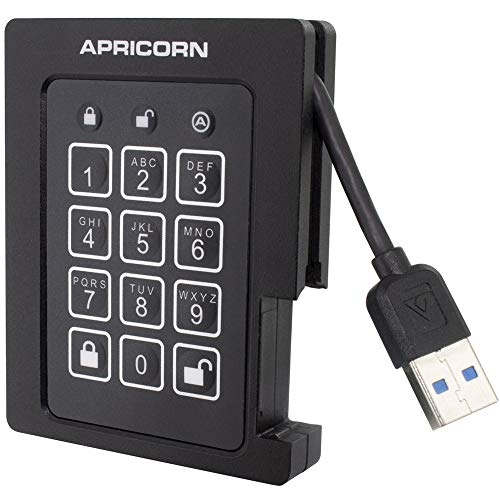
Apricorn Aegis Padlock 480GB Encrypted SSD
Best for: Secure, rugged portable storage
- Storage Capacity
- 480 GB
- Interface
- USB 3.0
- Form Factor
- External Portable
- Max Read Speed
- up to 230 MBs
- Max Write Speed
- up to 230 MBs
- Security
- FIPS Validated
View on Amazon: Apricorn Aegis Padlock 480GB Encrypted SSD Affiliate link
The Apricorn Aegis Padlock is a ruggedized, externally encrypted USB 3.0 drive. It offers 480 GB of storage with read and write speeds up to 230 MB/s. The device features FIPS 140-2 Level 2 validation for data security. It withstands extreme temperatures from -40 to 70 degrees Celsius and resists shock. This drive suits users needing portable, secure storage for harsh environments.
Pros
- FIPS 140-2 Level 2 validated encryption
- Operates in temperatures from -40 to 70 degrees Celsius
- Shock and vibration resistant design
- Silent operation with no moving parts
Cons
- Slower speeds compared to internal NVMe drives
- Limited to 480 GB capacity in this configuration
- External USB 3.0 interface adds bulk
Good fit if
- You need encrypted storage for sensitive data
- You work in extreme temperature environments
- You require shock-resistant portable drives
Skip if
- You need high-speed internal NVMe performance
- You require large capacity beyond 480 GB
- You prefer compact internal form factors
Verdict: Apricorn Aegis Padlock 480GB Encrypted SSD provides robust security and durability for users needing portable, encrypted storage in harsh conditions, though its external USB interface limits speed.
Specifications side by side
| Spec | SanDisk SSD Plus 2TB SATA III SSD | Apricorn Aegis Padlock 480GB Encrypted SSD |
|---|---|---|
| Storage Capacity | 2TB | 480 GB |
| Interface | SATA III 6 Gb/s | USB 3.0 |
| Form Factor | 2.5"/7mm | External Portable |
| Max Read Speed | Up to 545MB/s | up to 230 MBs |
| Max Write Speed | Up to 515MB/s | up to 230 MBs |
| Cache Type | SLC Caching | not stated |
| Security | not stated | FIPS Validated |
| Size | 2TB | 480GB |
| Dimensions | 3.95 × 2.75 × 0.27 inches | 3.25 × 0.5 × 2.5 inches |
| Weight | 1.15 ounces | 1.6 ounces |
| Color | Black | Black |
| Model | SDSSDA-2T00 | ASSD-3PL256-480F |
Frequently asked questions
Is the SanDisk SSD Plus an NVMe drive?
No. The SanDisk SSD Plus uses a SATA III interface. It connects via a 2.5-inch form factor. This design fits standard internal bays in desktops and laptops. It is not an NVMe drive, which uses a faster PCIe connection. You should choose this model if you need reliable storage for everyday tasks rather than maximum speed.
Does the Apricorn drive support encryption?
Yes. The Apricorn Aegis Padlock is FIPS Validated. This means it includes robust hardware encryption for your data. It is designed for secure, rugged portable storage. You can trust this drive for harsh conditions where data privacy is critical. The external USB interface limits speed but prioritizes security and durability.
Which drive has more storage capacity?
The SanDisk SSD Plus offers 2TB of space. The Apricorn Aegis Padlock provides 480GB. If you need to store large files, videos, or extensive libraries, the SanDisk option is the better choice. It delivers significantly more room for your data compared to the smaller capacity of the Apricorn model.
Can I install the Apricorn drive inside my computer?
No. The Apricorn Aegis Padlock is an external drive. It uses a USB interface for connectivity. It is designed for portable use rather than internal installation. The SanDisk SSD Plus is an internal drive that fits into a 2.5-inch bay. You should select the SanDisk model for internal upgrades.
Is the Apricorn drive durable?
Yes. The Apricorn Aegis Padlock is built for rugged use. It offers secure and durable portable storage. This makes it suitable for users who need to carry data in harsh conditions. The external design protects the drive while maintaining high security standards through its FIPS validation.
Which drive is faster for general use?
The SanDisk SSD Plus is faster for internal tasks. It delivers 545MB/s read speeds on a SATA III interface. This speed effectively replaces slow traditional hard drives. The Apricorn drive’s external USB interface limits its speed. Choose the SanDisk model for quicker file access and system performance.
What is the weight of these SSDs?
The SanDisk SSD Plus weighs 1.15 ounces. The Apricorn Aegis Padlock weighs 1.6 ounces. Both drives are lightweight and portable. The Apricorn is slightly heavier due to its rugged external casing. The SanDisk is lighter and designed for internal mounting. Consider weight if portability is a key factor for your setup.