Samsung vs Transcend: Nvme SSDs Compared by Specs
As an Amazon Associate we earn from qualifying purchases. Links on this page are affiliate links.
This samsung vs transcend nvme SSD comparison clarifies a common confusion. The Samsung 860 EVO and Transcend MTS420S are both SATA drives, not NVMe. They share the SATA III interface for broad compatibility. The main difference lies in their form factors and capacities. The Samsung uses a standard 2.5-inch design, while the Transcend uses a compact M.2 2242 module. You will see how these physical and storage differences affect your installation options.
Key differences
| Aspect | Samsung 860 EVO 500GB SATA SSD | Transcend 120GB M.2 2242 SATA SSD |
|---|---|---|
| Interface | SATA III | SATA III 6GB/s |
| Form Factor | 2.5 Inch | M.2 2242 |
| Storage Capacity | 500GB | 120GB |
| Max Read Speed | 550MB/s | up to 560MB/sec |
| Max Write Speed | 520MB/s | up to 500MB/sec |
| Cache Type | not listed | SLC Cache |
Which one should you choose?
Choose Samsung 860 EVO 500GB SATA SSD if
- You need a larger 500GB capacity for everyday computing.
- Your system requires a standard 2.5-inch drive bay.
- You want a drive with a 5-year limited warranty.
Choose Transcend 120GB M.2 2242 SATA SSD if
- You are installing a drive in a compact laptop or embedded system.
- You require the small M.2 2242 form factor.
- You prefer a drive that explicitly lists SLC Cache technology.
Verdict: Choose the Samsung 860 EVO if you need more storage space and a standard 2.5-inch form factor for desktops. Pick the Transcend MTS420S if your device only supports small M.2 2242 modules. Both offer similar SATA III speeds, so your choice depends on physical fit and capacity needs.
Samsung vs Transcend SSD Specs
Interface speed
Both drives use the SATA III interface, which caps bandwidth at 6 Gb/s. This means neither can exceed the limits of the SATA protocol, regardless of their internal controllers. The Samsung 860 EVO lists sequential read speeds up to 550MB/s and write speeds up to 520MB/s. The Transcend MTS420S offers slightly higher sequential read speeds of up to 560MB/sec, with write speeds up to 500MB/sec. In practice, these numbers are very close. You will not notice a significant difference in file transfers between these two models. Both are limited by the same connection standard, so interface speed is effectively a tie for typical desktop or laptop upgrades.
Form factor
The physical shape of these drives determines where you can install them. The Samsung 860 EVO uses a traditional 2.5-inch form factor. This is the standard size for most desktop PCs and many laptops, requiring a specific mounting bracket or bay. The Transcend MTS420S uses an M.2 2242 form factor. This is a small stick that plugs directly into a motherboard slot. It is ideal for compact builds or older laptops that lack 2.5-inch drive bays but have M.2 slots. The 2242 size is less common than the standard 2280, so you must check your motherboard compatibility. This makes the Samsung the more universally compatible choice for general upgrades.
Storage capacity
Capacity determines how much data you can store. The Samsung 860 EVO model listed here has 500GB of storage. This is a moderate amount, suitable for an operating system and several applications. The Transcend MTS420S model listed here has only 120GB of storage. This is quite low by modern standards, often insufficient for a full OS installation and essential programs. While both brands offer larger capacities in other variations, this specific comparison pits a larger drive against a much smaller one. For most users, 500GB provides a more usable experience without needing immediate expansion. The Samsung wins clearly on the capacity of these specific units.
NAND type
The type of flash memory affects longevity and consistent performance. The Transcend MTS420S explicitly uses 3D TLC NAND flash memory chips. TLC (Triple-Level Cell) stores three bits per cell, offering a good balance of speed and cost. The Samsung 860 EVO features mention V-NAND technology but do not specify the cell type (TLC or QLC) in the provided data. V-NAND is Samsung’s stacked architecture, which generally improves density and endurance. Without explicit confirmation of the cell type for the Samsung, we cannot definitively compare the NAND architecture. However, Transcend’s explicit mention of 3D TLC gives it a slight clarity advantage in specification transparency for this specific comparison.
Cache type
Cache memory helps manage data flow between the host and the NAND flash. The Transcend MTS420S explicitly lists SLC Cache support. SLC (Single-Level Cell) caching creates a fast buffer using a portion of the TLC drive, boosting write speeds for bursts of data. The Samsung 860 EVO data does not specify the cache type or size. While Samsung drives typically use dynamic SLC caching, the absence of this detail in the provided specs means we cannot verify the cache implementation for this specific model. The Transcend’s explicit mention of SLC cache provides more information about its performance behavior under load. This gives Transcend the edge in known specifications for this aspect.
Security
Data security is important for protecting sensitive information. The Samsung 860 EVO explicitly supports AES 256-bit hardware-based encryption. It is compliant with TCG Opal and IEEE 1670 standards, which are industry standards for self-encrypting drives. This allows for secure erase and full disk encryption without significant performance loss. The Transcend MTS420S data does not mention any hardware encryption capabilities or compliance standards. While it supports Trim and NCQ commands for maintenance, the lack of mentioned encryption features makes it less clear if it offers robust security. For users prioritizing data protection out of the box, the Samsung’s explicit encryption support is a clear advantage.
Choose based on form factor and capacity needs
Users needing 500GB in a standard 2.5 inch drive
The Samsung 860 EVO provides 500GB of storage in a traditional 2.5-inch SATA form factor. This size fits most desktops and laptops with standard drive bays. It offers sequential read speeds up to 550MB/s and write speeds up to 520MB/s. The 5-year warranty provides long-term reliability for everyday computing and large file transfers.
Users needing compact M.2 2242 drives for small builds
The Transcend MTS420S uses a compact M.2 2242 form factor, measuring just 42mm in length. This makes it ideal for small form factor PCs or older laptops with limited space. It delivers sequential read speeds up to 560MB/s and write speeds up to 500MB/s. The 120GB capacity suits basic storage needs where space is the primary constraint.
Users prioritizing higher sequential write performance
The Samsung 860 EVO lists a maximum write speed of 520MB/s, which is slightly higher than the Transcend MTS420S at 500MB/s. For tasks involving large file writes, this spec difference may offer marginal benefits. Both drives use SATA III, so neither exceeds 6 Gb/s bandwidth. The Samsung drive also includes hardware encryption for added data security.
The products compared

Samsung 860 EVO 500GB SATA SSD
Best for: Standard SATA upgrades with encryption needs
- Storage Capacity
- 500GB
- Interface
- SATA III
- Form Factor
- 2.5 Inch
- Max Read Speed
- 550MB/s
- Max Write Speed
- 520MB/s
- Dimensions
- 3.94 × 2.76 × 0.27 inches
View on Amazon: Samsung 860 EVO 500GB SATA SSD Affiliate link
The Samsung 860 EVO is a 2.5-inch SATA III SSD with 500GB of storage. It delivers sequential read speeds up to 550MB/s and write speeds up to 520MB/s. The drive uses V-NAND technology for reliable performance. It includes AES 256-bit hardware encryption. This SSD suits users needing standard SATA speeds for everyday computing or media tasks.
Pros
- Sequential read speeds up to 550MB/s
- Sequential write speeds up to 520MB/s
- AES 256-bit hardware encryption
- V-NAND technology for data integrity
Cons
- SATA III interface limits speed compared to NVMe
- 2.5-inch form factor is larger than M.2 drives
- No included mounting screws or cables
Good fit if
- You need reliable SATA speeds for daily use
- You require hardware encryption for data security
- You are upgrading a desktop or laptop with a 2.5-inch drive bay
Skip if
- You need NVMe speeds for high-performance tasks
- You require an M.2 form factor for space savings
- You want a drive with included mounting hardware
Verdict: The Samsung 860 EVO 500GB SATA SSD offers steady SATA III performance and strong security for users with standard 2.5-inch bays. It fits those prioritizing reliability and encryption over raw speed.
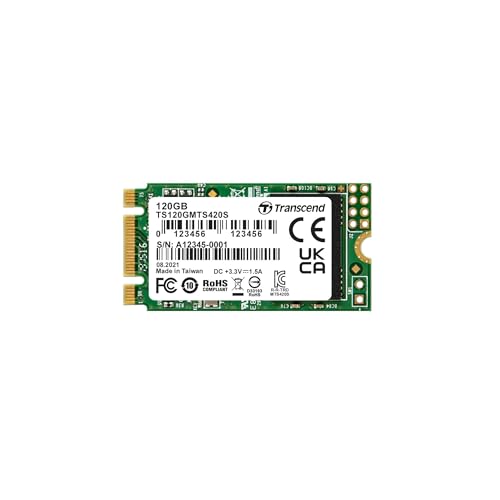
Transcend 120GB M.2 2242 SATA SSD
Best for: Compact PCs needing SATA III storage
- Storage Capacity
- 120GB
- Interface
- SATA III 6GB/s
- Max Read Speed
- 560MB/sec
- Max Write Speed
- 500MB/sec
- Cache Type
- SLC Cache
- Form Factor
- M.2 2242
View on Amazon: Transcend 120GB M.2 2242 SATA SSD Affiliate link
This is a 120GB M.2 2242 SSD using the SATA III 6GB/s interface. It offers read speeds up to 560MB/sec and write speeds up to 500MB/sec. The drive uses 3D TLC NAND with SLC Cache. You need this specific 42mm form factor for compact builds. It fits systems that cannot accommodate larger 2280 drives.
Pros
- Read speeds up to 560MB/sec
- Write speeds up to 500MB/sec
- Compact M.2 2242 form factor
- SLC Cache support for sustained performance
Cons
- Only 120GB storage capacity
- Smaller 2242 size limits compatibility with standard slots
- SATA III interface is slower than NVMe options
Good fit if
- You need a drive for a small form factor PC
- You require SATA III speeds for basic tasks
- You have a slot that accepts M.2 2242 modules
Skip if
- You need more than 120GB of space
- Your motherboard only supports M.2 2280 drives
- You want NVMe PCIe speeds
Verdict: Transcend MTS420S 120GB M.2 2242 SSD is a practical option for compact systems requiring SATA III speeds. It suits users with space constraints who do not need high capacity or NVMe performance.
Specifications side by side
| Spec | Samsung 860 EVO 500GB SATA SSD | Transcend 120GB M.2 2242 SATA SSD |
|---|---|---|
| Storage Capacity | 500GB | 120GB |
| Interface | SATA III | SATA III 6GB/s |
| Form Factor | 2.5 Inch | not stated |
| Max Read Speed | 550MB/s | 560MB/sec |
| Max Write Speed | 520MB/s | 500MB/sec |
| Cache Type | not stated | SLC Cache |
| Compatibility | not stated | Laptop, Desktop |
| Size | 500GB | 120GB |
| Dimensions | 3.94 × 2.76 × 0.27 inches | 0.87 × 0.15 × 3.15 inches |
| Weight | 1.76 ounces | not stated |
| Color | Black | Multicoloured |
| Model | MZ-76E500B/AM | TS120GMTS420S |
Frequently asked questions
Are these Samsung and Transcend drives NVMe SSDs?
No, they are SATA SSDs. The Samsung 860 EVO uses the SATA III interface. The Transcend MTS420S also relies on SATA III. Neither drive uses the NVMe protocol. You should look for different models if you require NVMe speeds.
Which drive offers more storage capacity?
The Samsung 860 EVO offers more capacity. It provides 500GB of storage space. The Transcend MTS420S provides only 120GB. If you need more room for files and applications, the Samsung option is the better choice for your storage needs.
Can I use the Transcend SSD in a desktop PC?
It depends on your motherboard. The Transcend drive uses an M.2 2242 form factor. This is a small size often found in compact systems. Most standard desktops use larger M.2 slots. You must check your specific motherboard compatibility before purchasing.
Does the Samsung SSD include hardware encryption?
Yes, it includes strong security features. The product data highlights encryption capabilities for users with security needs. This adds a layer of protection for your data. It fits users who prioritize reliability and data security alongside their standard storage upgrades.
What is the physical size of the Samsung drive?
It is a standard 2.5-inch drive. The dimensions are 3.94 inches in length, 2.76 inches in width, and 0.27 inches in height. This traditional form factor fits most laptops and desktops with standard drive bays. It weighs 1.76 ounces.
Does the Transcend SSD have a cache?
Yes, it uses SLC cache technology. This helps manage data writing speeds temporarily. The drive is designed for compact systems requiring SATA III speeds. It suits users with space constraints who do not need high capacity or faster NVMe performance.