NAND Type in Nvme SSDs: What It Is and Is It Worth It?
As an Amazon Associate we earn from qualifying purchases. Links on this page are affiliate links.
Understanding Nand Type Explained For You
When you shop for an NVMe or SATA SSD, the nand type explained is the first thing to check. This specification defines how data is stored on the flash memory chips inside your drive. It directly impacts speed, endurance, and overall reliability. You will mostly see two main categories: 3D NAND and TLC. Understanding these helps you pick the right drive for your needs.
3D NAND refers to the physical structure of the memory cells. Instead of stacking cells side by side on a flat plane, manufacturers stack them vertically in layers. This approach allows for higher density without shrinking the cell size too much. Smaller cells are harder to manufacture and more prone to errors. By going vertical, you get more storage in a smaller space. Most modern drives use this architecture. It is the standard for current performance SSDs.
TLC stands for Triple-Level Cell. This label tells you how many bits of data each memory cell stores. A TLC cell holds three bits of information. This is different from older SLC or MLC types, which store one or two bits. Storing more bits per cell increases capacity and lowers the cost per gigabyte. However, it also means the controller must work harder to manage the data accurately.
Why does this matter to you? TLC offers a good balance. It provides high speeds and large capacities at a reasonable price. It is suitable for most users, from gamers to office workers. If you see a drive listing TLC NAND, you can expect solid everyday performance. It is not the fastest option available, but it is reliable for general use. Always check the product specifications to confirm the NAND type. This simple step ensures you know exactly what you are buying. Avoid guessing based on marketing terms. Stick to the hard data provided in the listing.
3D NAND vs TLC Options
3D NAND
3D NAND stacks memory cells vertically to increase density and improve endurance. This structure allows for more reliable data retention and better performance under heavy loads compared to older planar designs. You will find this technology in drives like the ADATA SU800 1TB, which offers solid reliability for everyday tasks. It is a practical choice for system upgrades where consistent performance matters. The vertical arrangement helps mitigate wear, making it suitable for users who run many write-intensive applications. While not exclusively an NVMe feature, it is common in modern SATA and PCIe drives. You benefit from longer drive lifespan and stable speeds as the drive fills up.
TLC
TLC, or Triple-Level Cell, stores three bits of data per memory cell. This approach increases storage capacity while lowering the cost per gigabyte. You will see TLC in drives like the Intel D3-S4510 Enterprise SSD, which prioritizes reliability in server environments. It also appears in the HP EX900 NVMe drive for standard PC upgrades. The trade-off is slightly lower endurance compared to higher-end options, as more data per cell increases wear. However, modern controllers and SLC caching mitigate this for most users. TLC is ideal for those who need large capacities without paying a premium. It suits general computing, gaming, and light professional work where raw endurance is less critical than volume.
Is 3D TLC Worth Your Money
Who needs it
You should prioritize drives with 3D NAND TLC if you run demanding workloads daily. This combination offers a practical balance of speed and longevity. The 3D structure improves endurance by stacking cells vertically, which helps the drive last longer under heavy write cycles. TLC stores three bits per cell, providing higher capacities at manageable costs. This makes it ideal for gamers who install large titles, video editors handling 4K footage, and professionals who transfer large files frequently. If you need reliable performance for sustained tasks without worrying about premature wear, this spec is essential. It ensures your system remains responsive during intensive operations, making it a smart choice for power users who value both capacity and durability in their storage solution.
Who can skip it
You can ignore this specific spec if you use your computer for basic tasks like web browsing, email, and document editing. These activities involve minimal write cycles, so the endurance benefits of 3D NAND are unnecessary. You will not notice a performance difference for light usage. Instead, prioritize interface compatibility, such as PCIe generation or SATA support, and total storage capacity. Ensure the drive fits your motherboard or laptop slot. Focus on getting enough space for your operating system and applications. The advanced engineering of 3D TLC adds cost that does not benefit casual users. Save your budget for other upgrades or larger storage volumes. For simple computing needs, standard storage options perform just as well without the premium features designed for heavy data manipulation.
NAND Type Glossary
NAND Flash
The non-volatile memory technology used to store data on SSDs. It retains information without power and forms the core storage medium in modern NVMe and SATA drives.
3D NAND
A design that stacks memory cells vertically to increase density. This structure improves endurance and performance compared to older planar designs by utilizing space more efficiently.
TLC NAND
Triple-Level Cell memory stores three bits per cell. It offers high capacity and speed at a lower cost, making it a popular choice for mainstream consumer SSDs.
QLC NAND
Quad-Level Cell memory stores four bits per cell. It provides even higher densities and lower costs, though it typically has lower endurance and slower write speeds than TLC.
Endurance
The drive's ability to withstand repeated writing and erasing. It is measured in Terabytes Written (TBW) and indicates how long the SSD will last under heavy use.
Write Amplification
The ratio of actual data written to the NAND versus data received from the host. Higher amplification reduces lifespan and performance, often influenced by the NAND type and controller.
SLC NAND
Single-Level Cell stores one bit per cell. It offers the highest speed and endurance but is expensive, so it is mostly found in enterprise-grade drives rather than consumer models.
Quick picks
| # | Product | Best for | Price |
|---|---|---|---|
| 1 | ADATA SU800 1TB 2.5-Inch SATA SSD | SATA-based system upgrades needing 3D NAND | Check price of ADATA SU800 1TB 2.5-Inch SATA SSD on Amazon |
| 2 | Intel D3-S4510 1.92TB Enterprise SATA SSD | Read-intensive enterprise server storage | Check price of Intel D3-S4510 1.92TB Enterprise SATA SSD on Amazon |
| 3 | INLAND Pro 120GB 2.5-Inch SATA SSD | Basic storage upgrades for older PCs | Check price of INLAND Pro 120GB 2.5-Inch SATA SSD on Amazon |
| 4 | Addlink S20 512GB 2.5-Inch SATA SSD | Laptop upgrades and PS4 storage | Check price of Addlink S20 512GB 2.5-Inch SATA SSD on Amazon |
| 5 | HP EX900 250GB PCIe NVMe M.2 SSD | Standard PC upgrades needing reliable NVMe storage | Check price of HP EX900 250GB PCIe NVMe M.2 SSD on Amazon |
| 6 | Silicon Power A55 1TB 2.5-Inch SATA SSD | Standard desktop and laptop SATA upgrades | Check price of Silicon Power A55 1TB 2.5-Inch SATA SSD on Amazon |
Our 6 picks

ADATA SU800 1TB 2.5-Inch SATA SSD
Best for: SATA-based system upgrades needing 3D NAND
- NAND Type
- 3D NAND (what this guide is about)
- Storage Capacity
- 1TB
- Interface
- SATA III
- Form Factor
- 2.5 Inch
- Max Read Speed
- 560 MB/s
- Max Write Speed
- 520 MB/s
View on Amazon: ADATA SU800 1TB 2.5-Inch SATA SSD Affiliate link
The ADATA Su800 uses 3D NAND technology in a standard 2.5-inch SATA III form factor. It offers sequential read speeds up to 560 MB/s and write speeds up to 520 MB/s. The drive includes a DRAM cache buffer and dynamic SLC caching to help manage performance. It provides 1 TB of storage capacity. This SSD suits users upgrading older systems who need reliable 3D NAND density without the cost of NVMe interfaces.
Pros
- 3D NAND flash memory for improved density and endurance
- High sequential read speed of 560 MB/s
- Includes DRAM cache buffer for better sustained performance
- Dynamic SLC caching boosts write speeds
Cons
- SATA III interface limits speeds to around 560 MB/s
- No NVMe PCIe interface for higher bandwidth
- 2.5-inch form factor is bulkier than M.2 drives
Good fit if
- You are upgrading a desktop or laptop with a 2.5-inch SATA bay
- You prefer 3D NAND for its efficiency and endurance
- You need 1 TB of storage for general use
Skip if
- You require NVMe PCIe speeds exceeding 3000 MB/s
- You need an M.2 2280 form factor for tight spaces
- You want the absolute fastest sequential write performance
Verdict: The ADATA Su800 1TB 3D NAND SATA SSD delivers solid 3D NAND reliability and decent SATA speeds for everyday tasks. It is a practical upgrade for systems that support 2.5-inch drives but do not require the extreme throughput of modern NVMe standards.

Intel D3-S4510 1.92TB Enterprise SATA SSD
Best for: Read-intensive enterprise server storage
- NAND Type
- TLC (what this guide is about)
- Storage Capacity
- 1.92TB
- Interface
- SATA 6Gb/s
- Form Factor
- 2.5-Inch
- Max Read Speed
- 560 MB/s
- Max Write Speed
- 510 MB/s
View on Amazon: Intel D3-S4510 1.92TB Enterprise SATA SSD Affiliate link
This Intel D3-S4510 is a 1.92TB SATA drive built for read-heavy tasks. It uses 64-layer 3D TLC NAND. You get 560 MB/s read and 510 MB/s write speeds. It supports 1 DWPD endurance. The drive includes AES 256-bit encryption and power loss protection. It fits standard 2.5-inch server bays. It suits data centers needing reliable, consistent performance for virtualization or databases.
Pros
- 64-layer Intel 3D TLC NAND
- 1 DWPD endurance rating
- AES 256-bit encryption
- Power loss protection
- 560 MB/s sequential read speed
Cons
- Read-intensive endurance limits write-heavy workloads
- Enterprise form factor suits servers, not desktops
- SATA interface caps speed below NVMe drives
Good fit if
- You need high endurance for read-heavy server workloads
- You require enterprise-grade data protection features
- You are upgrading a 2.5-inch SATA server bay
Skip if
- You need high-speed NVMe performance
- You are building a consumer desktop PC
- You prioritize write-heavy mixed workloads
Verdict: Intel D3-S4510 1.92TB Enterprise SSD delivers consistent low-latency access for read-intensive server environments. It is the right choice for data centers prioritizing reliability and endurance over raw consumer speed.
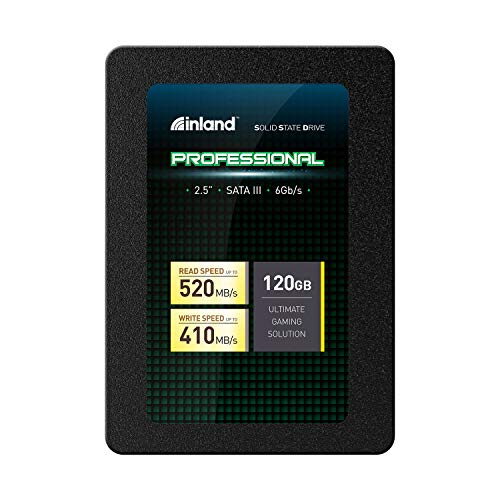
INLAND Pro 120GB 2.5-Inch SATA SSD
Best for: Basic storage upgrades for older PCs
- NAND Type
- 3D NAND, TLC (what this guide is about)
- Storage Capacity
- 120GB
- Interface
- SATA III 6Gb/s
- Form Factor
- 2.5" 7mm
- Max Read Speed
- Up to 520MB/s
- Max Write Speed
- Up to 410MB/s
View on Amazon: INLAND Pro 120GB 2.5-Inch SATA SSD Affiliate link
The INLAND Pro 120GB SSD uses 3D TLC NAND flash in a standard 2.5-inch form factor. It connects via SATA III 6Gb/s, offering sequential read speeds up to 520MB/s and write speeds up to 410MB/s. This drive is designed for mainstream PCs, laptops, and ultrabooks. It provides a reliable upgrade path for users seeking faster boot times and application loading without the bulk of larger capacities or newer interfaces.
Pros
- Uses 3D TLC NAND flash for durability
- Sequential read speeds up to 520MB/s
- Standard 2.5-inch 7mm form factor
- SATA III 6Gb/s interface compatibility
Cons
- 120GB capacity is smaller than many competitors
- SATA III limits speed compared to NVMe options
- No SLC caching mentioned in specifications
Good fit if
- You need a basic 2.5-inch SATA drive
- You are upgrading an older laptop or PC
- You want 3D NAND technology at a lower capacity
Skip if
- You require high-speed NVMe performance
- You need more than 120GB of storage
- You are building a modern gaming workstation
Verdict: INLAND Pro 120GB 3D NAND SATA SSD is a practical entry-level drive for users who need reliable 3D TLC storage in a standard 2.5-inch form factor. It fits older systems or light use cases where SATA speeds are sufficient.

Addlink S20 512GB 2.5-Inch SATA SSD
Best for: Laptop upgrades and PS4 storage
- NAND Type
- 3D NAND (what this guide is about)
- Storage Capacity
- 512GB
- Interface
- SATA III
- Form Factor
- 2.5 inch
- Max Read Speed
- 500MB/s
- Max Write Speed
- 450MB/s
View on Amazon: Addlink S20 512GB 2.5-Inch SATA SSD Affiliate link
The Addlink S20 is a 2.5-inch SATA III drive using 3D NAND flash. It offers sequential speeds up to 500MB/s read and 450MB/s write. The 512GB capacity fits standard laptop bays and desktops. It uses SLC caching to handle larger file transfers without a dedicated DRAM chip. This design keeps power draw low and operation silent. It is a practical upgrade path for users moving away from mechanical hard drives.
Pros
- 3D NAND flash for shock resistance
- Up to 500MB/s read speed
- SLC caching for sustained performance
- Standard 2.5-inch 7mm form factor
Cons
- No dedicated DRAM cache chip
- SATA III interface limits peak speed
- 512GB capacity is smaller than 1TB options
Good fit if
- You need a silent drive for a laptop
- You are upgrading a PS4 or desktop
- You want shock resistance for travel
Skip if
- You require PCIe NVMe speeds
- You need more than 512GB storage
- You want a drive with DRAM
Verdict: Addlink S20 512GB SATA SSD provides reliable 3D NAND performance for standard SATA ports. It suits users who prioritize silent operation and shock resistance over maximum throughput.

HP EX900 250GB PCIe NVMe M.2 SSD
Best for: Standard PC upgrades needing reliable NVMe storage
- NAND Type
- TLC (what this guide is about)
- Storage Capacity
- 250GB
- Interface
- PCIe 3.0 x4
- Form Factor
- M.2 2280
- Dimensions
- 3.46 × 0.87 × 0.09 inches
View on Amazon: HP EX900 250GB PCIe NVMe M.2 SSD Affiliate link
The HP EX900 is a 250GB M.2 2280 drive using PCIe 3.0 x4 and TLC NAND. It offers sequential read speeds up to 2,100 MB/s and write speeds up to 1,500 MB/s. The drive includes 200 TBW endurance and a 2 million hour MTBF rating. It is designed for standard Windows PCs and HP systems, providing reliable storage for everyday computing tasks without requiring complex configuration.
Pros
- PCIe 3.0 x4 interface for NVMe performance
- Sequential read speeds up to 2,100 MB/s
- 200 TBW endurance rating for longevity
- 2 million hour MTBF reliability rating
Cons
- Small 250GB capacity limits large file storage
- Limited to PCIe 3.0 speeds, not PCIe 4.0
- Not intended for use in HP workstations
Good fit if
- You need a fast NVMe drive for a standard PC
- You want reliable endurance for daily computing
- You are upgrading an HP desktop or laptop
Skip if
- You require more than 250GB of storage
- You need PCIe 4.0 or newer speeds
- You are building or upgrading an HP workstation
Verdict: The HP EX900 250GB NVMe SSD fits users who need reliable, fast storage for standard PCs but do not require workstation-grade hardware or large capacity.

Silicon Power A55 1TB 2.5-Inch SATA SSD
Best for: Standard desktop and laptop SATA upgrades
- NAND Type
- 3D NAND (what this guide is about)
- Storage Capacity
- 1TB
- Interface
- SATA III
- Form Factor
- 2.5"
- Cache Type
- SLC Cache
- Dimensions
- 3.94 × 2.75 × 0.28 inches
View on Amazon: Silicon Power A55 1TB 2.5-Inch SATA SSD Affiliate link
The Silicon Power A55 uses 3D NAND flash in a 2.5-inch SATA III form factor. It offers 1TB of storage and employs SLC caching to boost transfer speeds. The drive features a 7mm slim profile, making it suitable for ultrabooks and standard desktops. This configuration prioritizes reliable sequential performance for everyday computing tasks.
Pros
- 1TB storage capacity
- 3D NAND flash technology
- SLC cache performance boost
- 7mm slim design
Cons
- SATA III interface limits max speeds
- No DRAM cache listed
- Heavier than M.2 NVMe drives
Good fit if
- You need 1TB of storage
- You have a 2.5-inch drive bay
- You want a reliable SATA upgrade
Skip if
- You need PCIe NVMe speeds
- You are building a compact M.2 system
- You require enterprise endurance ratings
Verdict: Silicon Power A55 1TB SATA SSD delivers solid 3D NAND performance for standard SATA hosts. It fits users who need ample space without the premium cost of NVMe.
Specifications side by side
| Spec | ADATA SU800 1TB 2.5-Inch SATA SSD | Intel D3-S4510 1.92TB Enterprise SATA SSD | INLAND Pro 120GB 2.5-Inch SATA SSD | Addlink S20 512GB 2.5-Inch SATA SSD | HP EX900 250GB PCIe NVMe M.2 SSD | Silicon Power A55 1TB 2.5-Inch SATA SSD |
|---|---|---|---|---|---|---|
| Storage Capacity | 1TB | 1.92TB | 120GB | 512GB | 250GB | 1TB |
| Interface | SATA III | SATA 6Gb/s | SATA III 6Gb/s | SATA III | PCIe 3.0 x4 | SATA III |
| Form Factor | 2.5 Inch | 2.5-Inch | 2.5" 7mm | 2.5 inch | M.2 2280 | 2.5" |
| Max Read Speed | 560 MB/s | 560 MB/s | Up to 520MB/s | 500MB/s | not stated | not stated |
| Max Write Speed | 520 MB/s | 510 MB/s | Up to 410MB/s | 450MB/s | not stated | not stated |
| Cache Type | not stated | not stated | not stated | SLC Caching | not stated | SLC Cache |
| Compatibility | not stated | not stated | Laptop, Desktop | not stated | not stated | not stated |
| NAND Type | 3D NAND | TLC | 3D NAND, TLC | 3D NAND | TLC | 3D NAND |
| Size | 1 TB | not stated | 120GB | 512GB | 250GB | 1TB |
| Dimensions | 3.95 × 0.28 × 2.75 inches | 2.5 × 2.5 × 1.5 inches | 3.94 × 2.75 × 0.28 inches | 3.94 × 2.75 × 0.28 inches | 3.46 × 0.87 × 0.09 inches | 3.94 × 2.75 × 0.28 inches |
| Weight | 1.6 ounces | 3.2 ounces | not stated | not stated | not stated | 1.76 ounces |
| Color | Black | Silver | 120GB | S20 | Black | 1TB |
| Model | ASU800SS-1TT-C | SSDSC2KB019T8 | 4335233676 | ad512GBS20S3S | 2YY43AA#ABC | SP001TBSS3A55S25 |
Frequently asked questions
What is the difference between 3D NAND and TLC?
3D NAND refers to the physical structure of the memory chips, where cells are stacked vertically to increase density and endurance. TLC, or Triple-Level Cell, describes how many bits are stored in each cell. Many modern drives, like the Intel D3-S4510, combine both technologies to offer high capacity and reliable performance for enterprise or consumer use.
Does 3D NAND last longer than older NAND types?
Yes, 3D NAND generally offers better endurance because the vertical stacking reduces interference between cells. This structure allows for more reliable data retention over time. Drives like the ADATA Su800 utilize this technology to provide solid reliability for everyday tasks, making them a practical choice for system upgrades that need consistent performance.
Is TLC NAND suitable for gaming and daily use?
TLC NAND is well-suited for gaming and daily computing because it balances speed and cost effectively. The HP EX900 NVMe drive uses TLC to deliver fast PCIe 3.0 performance for standard PC upgrades. This makes it a strong option for users who need reliable, high-speed storage without requiring the extreme throughput of enterprise-grade hardware.
Can I use a 3D NAND SSD in an older laptop?
You can use a 3D NAND SATA SSD in many older laptops that support 2.5-inch drives. The INLAND Pro 120GB and Addlink S20 512GB are designed for standard SATA III interfaces. These drives fit older systems or light use cases where SATA speeds are sufficient, providing a silent and shock-resistant upgrade path.
What is an SLC cache in an SSD?
An SLC cache is a portion of the drive that operates in Single-Level Cell mode to boost write speeds temporarily. Drives like the Addlink S20 and Silicon Power A55 include this feature to handle burst transfers more efficiently. This helps maintain performance during large file copies, even if the main storage uses TLC or 3D NAND.
Is 3D TLC better for read-intensive server workloads?
Yes, 3D TLC is ideal for read-intensive server environments due to its balance of endurance and capacity. The Intel D3-S4510 Enterprise SSD delivers consistent low-latency access for data centers. It prioritizes reliability and longevity over raw consumer speed, making it the right choice for professional server storage needs.
Does the form factor affect NAND type performance?
The form factor, such as 2.5-inch SATA or M.2 NVMe, does not change the underlying NAND technology itself. However, it determines the interface speed. For example, the HP EX900 uses an M.2 PCIe 3.0 interface with TLC NAND, offering faster data transfer rates than 2.5-inch SATA drives like the Silicon Power A55, which uses the same 3D NAND but a slower interface.