KingSpec vs Transcend Nvme SSDs: Which Brand Fits You?
As an Amazon Associate we earn from qualifying purchases. Links on this page are affiliate links.
When you compare KingSpec vs transcend nvme SSD options, you find two very different storage solutions. Both brands offer solid-state drives for specific use cases. The KingSpec drive targets legacy systems with an older PATA IDE interface. The Transcend drive uses modern M.2 SATA III technology. You need to choose based on your device’s connector type and required speed.
Key differences
| Aspect | KingSpec 64GB 2.5-Inch PATA IDE SSD | Transcend 120GB M.2 2242 SATA SSD |
|---|---|---|
| Interface | 44Pin PATA IDE | SATA III 6GB/s |
| Form Factor | 2.5 inch | M.2 2242 |
| Max Read Speed | not listed | up to 560MB/sec |
| Max Write Speed | not listed | up to 500MB/sec |
| NAND Type | not listed | 3D TLC |
| Cache Type | not listed | SLC Cache |
Which one should you choose?
Choose KingSpec 64GB 2.5-Inch PATA IDE SSD if
- You are upgrading vintage laptops, CNC machines, or industrial equipment that uses a 44Pin PATA IDE connection.
- You need a rugged drive with no moving parts for harsh workshop environments with high shock and vibration.
Choose Transcend 120GB M.2 2242 SATA SSD if
- You need a fast drive for a modern M.2 slot with SATA III support.
- You want higher sequential read and write speeds for general computing tasks.
Verdict: Choose the KingSpec drive if you are maintaining legacy industrial or vintage computer hardware. Pick the Transcend model for modern systems requiring faster data transfer and compact M.2 sizing.
KingSpec vs Transcend SSD Comparison
interface technology
The KingSpec drive uses a 44Pin PATA IDE interface, designed for legacy equipment like vintage ThinkPad laptops and industrial CNC machines. This older parallel interface requires specific compatibility and often serves as a direct drop-in replacement for aging hard drives in embedded systems. In contrast, the Transcend MTS420S utilizes a modern SATA III 6GB/s interface. This standard connects via M.2 slots, offering significantly higher bandwidth potential and broader support in contemporary motherboards and compact PCs. You must choose based on whether your system supports ancient IDE ports or modern M.2 slots.
form factor
Physical dimensions dictate where you can install these drives. The KingSpec 64GB model follows a traditional 2.5-inch form factor, measuring approximately 5.91 inches in length and 4.49 inches in width. This size fits standard drive bays in older laptops and industrial enclosures. The Transcend 120GB drive adopts an M.2 2242 form factor, measuring just 3.15 inches in length and 0.87 inches in width. This compact shape is ideal for ultra-thin laptops, mini PCs, or embedded systems with limited internal space. Your available drive bay determines which physical size works for your build.
storage capacity
Capacity choices vary between these two specific models. The KingSpec option listed here provides 64GB of storage, with variations available up to 128GB. This lower capacity is typical for industrial applications or boot drives for legacy operating systems where large file storage is unnecessary. The Transcend model offers 120GB of space in this configuration, with variations extending up to 2TB. This higher capacity supports modern operating systems, applications, and user files more effectively. If you need more than 64GB for your primary tasks, the Transcend option provides greater utility for general computing.
transfer speed
Performance metrics differ significantly due to interface and controller technology. The Transcend drive specifies read speeds up to 560MB/sec and write speeds up to 500MB/sec, leveraging SATA III bandwidth. These speeds ensure quick system boot times and responsive application loading in modern environments. The KingSpec product description does not list specific transfer speeds, focusing instead on stability and compatibility with older hardware. Without published speed figures, you cannot compare performance directly. For users prioritizing fast data access and modern responsiveness, the Transcend drive offers documented performance advantages.
nand type
The underlying flash memory technology impacts longevity and cost. The Transcend drive explicitly uses 3D TLC NAND flash memory chips, which are common in modern consumer SSDs for balancing capacity and performance. It also incorporates SLC Cache technology to boost transient write speeds. The KingSpec product data does not specify the NAND type, only mentioning high-reliability memory chips suitable for industrial use. This lack of detail makes it difficult to assess endurance or performance characteristics. For transparency regarding memory technology, the Transcend drive provides clearer specifications for informed decision-making.
Which KingSpec or Transcend SSD is right?
User restoring vintage ThinkPad or CNC equipment
This KingSpec drive uses a 44Pin PATA IDE interface, making it a direct drop-in replacement for legacy hardware. Its 2.5-inch form factor fits original bays without extra cables. The shock-resistant design ensures stable operation in industrial environments, providing reliable performance for older laptops and embedded systems that require specific parallel connectivity.
User needing compact M.2 storage for modern devices
The Transcend SSD features a 2242 M.2 form factor with SATA III connectivity. It delivers read speeds up to 560MB/sec and write speeds up to 500MB/sec. This drive supports Trim and NCQ commands for efficient data management. Its compact size and modern interface suit systems requiring fast, space-saving storage solutions with established command support.
User prioritizing long-term industrial reliability
KingSpec builds this drive for continuous runtime in harsh conditions. The absence of moving parts prevents data loss from vibration. High-reliability memory chips support long-term nonstop operation. This stability matches the multi-year service life demands of factory automation and testing instruments, ensuring consistent performance where other drives might fail under physical stress.
The products compared
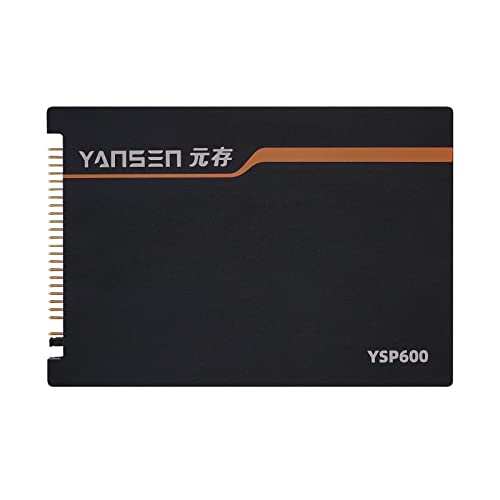
KingSpec 64GB 2.5-Inch PATA IDE SSD
Best for: Vintage laptops and industrial CNC devices
- Storage Capacity
- 64GB
- Interface
- 44Pin PATA IDE
- Form Factor
- 2.5"
- Compatibility
- Laptop
- Dimensions
- 5.91 × 4.49 × 0.79 inches
- Weight
- 4.64 ounces
View on Amazon: KingSpec 64GB 2.5-Inch PATA IDE SSD Affiliate link
This KingSpec drive replaces aging 44Pin PATA IDE hard drives in vintage laptops and industrial equipment. It uses a 2.5-inch form factor with 64GB of storage capacity. The lack of moving parts provides shock resistance and stable performance for continuous operation. It requires no extra drivers for plug-and-play installation. This drive suits users needing to revive legacy CNC machines or embedded control terminals that rely on parallel IDE interfaces.
Pros
- Standard 44Pin PATA IDE interface for broad compatibility
- Shock and vibration resistant design with no moving parts
- Plug-and-play installation with zero extra driver software
- Slim 2.5-inch internal form factor fits original bays
Cons
- Limited 64GB storage capacity
- Old PATA IDE interface not suitable for modern systems
- Low capacity compared to modern NVMe alternatives
Good fit if
- You need to replace a failing drive in a vintage ThinkPad or industrial CNC device
- You require a shock-resistant storage solution for harsh workshop environments
- You are upgrading embedded industrial control terminals that use 44Pin IDE
Skip if
- You need high storage capacity for modern operating systems
- You are building a current-generation desktop or laptop
- You require fast NVMe or SATA III speeds for general computing
Verdict: KingSpec 64GB 2.5" PATA IDE SSD is a specialized storage solution for reviving legacy industrial and vintage laptop hardware. It fits users who need reliable, shock-resistant storage for equipment that only accepts 44Pin IDE interfaces.
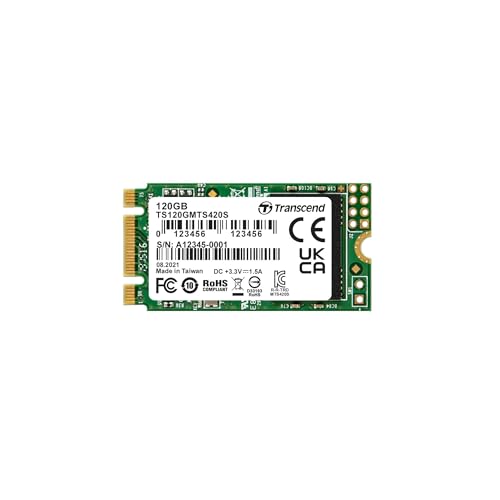
Transcend 120GB M.2 2242 SATA SSD
Best for: small form factor laptop upgrades
- Storage Capacity
- 120GB
- Interface
- SATA III 6GB/s
- Max Read Speed
- 560MB/sec
- Max Write Speed
- 500MB/sec
- Cache Type
- SLC Cache
- Form Factor
- M.2 2242
View on Amazon: Transcend 120GB M.2 2242 SATA SSD Affiliate link
The Transcend MTS420S is a compact 120GB M.2 2242 SSD designed for systems with limited space. It uses a SATA III 6GB/s interface to deliver sequential read speeds up to 560MB/sec and write speeds up to 500MB/sec. The drive includes SLC cache to help maintain performance during sustained writes. It supports standard commands like TRIM and NCQ for better efficiency. This drive suits users needing reliable storage in small form factors.
Pros
- SATA III 6GB/s interface for broad compatibility
- Read speeds up to 560MB/sec
- Compact M.2 2242 form factor
- SLC cache for improved write performance
Cons
- Only 120GB capacity available in this specific listing
- SATA interface limits speeds compared to NVMe drives
- Smaller 2242 size may not fit all M.2 slots
Good fit if
- You need an SSD for a laptop with only an M.2 2242 slot
- You want a reliable SATA drive for basic computing tasks
- You are building a compact industrial or CNC device
Skip if
- You require high-speed NVMe performance for gaming
- You need more than 120GB of storage space
- Your motherboard only supports M.2 2280 drives
Verdict: Transcend MTS420S 120GB M.2 SATA SSD is a solid choice for upgrading older laptops or small form factor PCs that use M.2 2242 slots. It provides dependable SATA speeds without the bulk of larger drives.
Specifications side by side
| Spec | KingSpec 64GB 2.5-Inch PATA IDE SSD | Transcend 120GB M.2 2242 SATA SSD |
|---|---|---|
| Storage Capacity | 64GB | 120GB |
| Interface | 44Pin PATA IDE | SATA III 6GB/s |
| Form Factor | 2.5" | not stated |
| Max Read Speed | not stated | 560MB/sec |
| Max Write Speed | not stated | 500MB/sec |
| Cache Type | not stated | SLC Cache |
| Compatibility | Laptop | Laptop, Desktop |
| Dimensions | 5.91 × 4.49 × 0.79 inches | 0.87 × 0.15 × 3.15 inches |
| Weight | 4.64 ounces | not stated |
| Size | 64GB | 120GB |
| Color | As per images | Multicoloured |
| Model | FBA_KSD-PA25.6-064MS | TS120GMTS420S |
Frequently asked questions
Is the KingSpec drive compatible with modern M.2 slots?
No. The KingSpec 64GB model uses a 2.5-inch form factor with a 44Pin PATA IDE interface. It is designed for legacy systems, not modern M.2 slots. You need specific vintage hardware or industrial devices that accept this older parallel connection. It will not fit standard NVMe or SATA M.2 motherboards.
Does the Transcend SSD support NVMe protocols?
No. This Transcend drive uses the SATA III interface, not NVMe. It is an M.2 2242 SATA SSD. While it fits in M.2 slots, it operates at SATA speeds. You should verify your system supports SATA over M.2 before installing this drive for small form factor upgrades.
Which brand is better for vintage laptops?
KingSpec is the better choice for vintage laptops. The 64GB PATA IDE SSD is explicitly designed for legacy hardware like older ThinkPad models. It provides a direct drop-in replacement for aging 44Pin IDE interfaces. Transcend offers modern M.2 drives that are incompatible with these older parallel storage requirements.
What is the difference in form factors between these two drives?
The KingSpec drive uses a 2.5-inch form factor, which is standard for older internal laptop bays. The Transcend drive uses an M.2 2242 form factor, a smaller rectangular shape for compact modern devices. These physical differences mean they serve entirely different hardware generations and cannot be swapped.
Can I use the Transcend SSD in an industrial CNC machine?
It depends on the machine's interface. The Transcend drive uses an M.2 SATA III connection. If your industrial CNC device has an M.2 SATA slot, it may work. However, if the machine requires a 44Pin PATA IDE interface, you must use the KingSpec drive instead, as it is built for that specific legacy connection.
How much storage does each drive offer?
The KingSpec drive offers 64GB of storage capacity. The Transcend drive provides 120GB of storage. Both are entry-level capacities suitable for basic operating system installations or lightweight tasks. Neither drive offers high-capacity options for large media libraries or extensive data storage needs.