Crucial or Intel? Nvme SSDs Compared in 2026
As an Amazon Associate we earn from qualifying purchases. Links on this page are affiliate links.
This comparison looks at the Crucial X10 and the Intel D3-S4510. While the search term often brings up a crucial vs intel nvme SSD debate, these drives serve very different roles. Both offer reliable storage for specific tasks. The main difference lies in their design and interface. One is a portable USB drive for everyday use, while the other is an enterprise SATA drive built for servers. You need to choose based on your connection type and workload.
Key differences
| Aspect | Crucial X10 1TB Portable SSD | Intel D3-S4510 1.92TB Enterprise SATA SSD |
|---|---|---|
| Interface | USB 3.2 | SATA 6Gb/s |
| Form Factor | Portable SSD | 2.5-Inch |
| Max Read Speed | Up to 2,100 MB/s | 560 MB/s |
| NAND Type | not listed | 3D TLC |
| Endurance | not listed | 1 DWPD |
Which one should you choose?
Choose Crucial X10 1TB Portable SSD if
- You need a portable drive for laptops or consoles
- You require high transfer speeds via USB-C
- You want a compact drive with water resistance
Choose Intel D3-S4510 1.92TB Enterprise SATA SSD if
- You are building or upgrading a server
- You need enterprise-grade data protection and encryption
- You require consistent low-latency performance for databases
Verdict: The Crucial X10 is the right choice for users who need fast, portable storage for everyday devices. The Intel D3-S4510 is designed for enterprise environments where reliability and server compatibility are critical. Select the drive that matches your hardware interface and intended use case.
Portable Drive vs Enterprise Storage
Interface and speed
The Crucial X10 uses a USB 3.2 connection to deliver up to 2,100 MB/s read speeds. This makes it ideal for transferring large files quickly between devices. The Intel D3-S4510 relies on a SATA 6Gb/s interface. It offers 560 MB/s sequential reads and 510 MB/s writes. While the Intel drive is reliable for server environments, its speed is significantly lower than the portable Crucial unit. If you need fast data movement for creative work or gaming, the USB connection on the Crucial X10 provides a clear performance advantage over the older SATA standard found in the Intel drive.
Form factor and portability
These drives are designed for completely different physical setups. The Crucial X10 is a portable external SSD measuring 1.96 x 2.55 x 0.39 inches and weighing just 1.13 ounces. It fits easily in a pocket or bag. The Intel D3-S4510 is a 2.5-inch internal drive with a standard 1.5-inch height, weighing 3.2 ounces. It is built to sit inside a server rack or desktop chassis. You cannot carry the Intel drive with you. For mobile users who need storage on the go, the compact and lightweight design of the Crucial X10 is the only practical choice.
Endurance and reliability
The Intel D3-S4510 is built for continuous operation in data centers. It carries a 1 Drive Write Per Day (DWPD) endurance rating and a 2 million hour MTBF. This means it can handle heavy write workloads for years in a 24/7 environment. The Crucial X10 is a consumer-grade portable drive. It does not list enterprise endurance metrics like DWPD or MTBF in its specifications. It is designed for intermittent use by individuals. If your priority is mission-critical uptime and heavy write endurance, the Intel drive offers superior reliability specifications for server applications.
Data protection features
The Intel D3-S4510 includes robust enterprise security features. It supports AES 256-bit encryption, power loss protection, and end-to-end data protection. These features ensure data integrity during unexpected power failures, which is common in server environments. The Crucial X10 focuses on physical durability, offering IP65 dust and water resistance and drop resistance up to 9.8 feet. It does not list AES encryption or power loss protection in its specs. For sensitive data in a corporate setting, the Intel drive provides stronger internal data safeguards.
Capacity options
The Crucial X10 is available in multiple capacities, including 1TB, 2TB, 4TB, 6TB, and 8TB. This allows you to choose the exact amount of space you need for media or backups. The Intel D3-S4510 is listed here with a fixed 1.92TB capacity. While 1.92TB is a standard enterprise size, the Crucial X10 offers more flexibility for consumers who might want 4TB or 8TB of storage. If you need high capacity options beyond 2TB, the Crucial X10 provides a wider range of choices for your specific storage requirements.
Which portable or enterprise drive suits you
Creators needing fast external transfers
The Crucial X10 delivers up to 2,100 MB/s read speeds via USB 3.2. Its portable 1TB capacity and IP65 water resistance make it ideal for moving large files on the go. You get broad compatibility with Mac, Windows, and consoles, ensuring quick access to your media anywhere you travel.
Data centers requiring reliable storage
The Intel D3-S4510 offers 1.92TB of enterprise-grade SATA storage with 1 DWPD endurance. Its 2 million hour MTBF and power loss protection ensure uptime for mission-critical workloads. This 2.5-inch drive integrates seamlessly into existing server infrastructure without requiring additional hardware, providing consistent low-latency performance for databases.
Users needing simple desktop upgrades
If you need a drop-in replacement for a standard SATA slot, the Intel D3-S4510 fits perfectly. Its 560 MB/s read speed handles read-intensive tasks like virtualization and content delivery efficiently. The 3D TLC NAND provides reliable storage for legacy systems or entry-level servers that do not require NVMe speeds.
The products compared
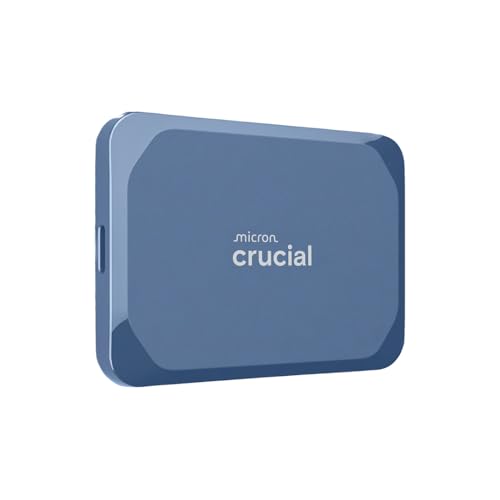
Crucial X10 1TB Portable SSD
Best for: durable portable storage for creators
- Storage Capacity
- 1TB
- Interface
- USB 3.2
- Form Factor
- Portable SSD
- Max Read Speed
- Up to 2,100 MB/s
- Compatibility
- Mac
- Host Interface
- USB-C
View on Amazon: Crucial X10 1TB Portable SSD Affiliate link
The Crucial X10 is a portable SSD designed for fast data access on the go. It offers up to 2,100MB/s read speeds via USB 3.2. The drive is IP65 rated for dust and water resistance and survives drops up to 9.8 feet. It works with Windows, Mac, and consoles. This compact 1TB drive suits creators and students who need durable, high-speed external storage.
Pros
- Up to 2,100MB/s read speeds
- IP65 dust and water resistance
- Drop resistant up to 9.8 feet
- Compatible with Mac, Windows, and consoles
Cons
- Only 1TB capacity available in this model
- No included carrying case mentioned
- External drive requires USB connection
Good fit if
- You need a durable drive for travel
- You want fast transfer speeds for large files
- You use Mac or Windows computers
Skip if
- You need internal NVMe storage
- You require more than 1TB capacity
- You prefer a drive with a display
Verdict: Crucial X10 1TB Portable SSD is a rugged, fast external drive for users who need reliable storage on the move. It fits creators and students who value durability and speed.

Intel D3-S4510 1.92TB Enterprise SATA SSD
Best for: read-intensive enterprise server storage
- Storage Capacity
- 1.92TB
- Interface
- SATA 6Gb/s
- Form Factor
- 2.5-Inch
- Max Read Speed
- 560 MB/s
- Max Write Speed
- 510 MB/s
- NAND Type
- TLC
View on Amazon: Intel D3-S4510 1.92TB Enterprise SATA SSD Affiliate link
This Intel D3-S4510 is a 1.92TB enterprise drive built for read-heavy tasks like virtualization and databases. It uses 64-layer 3D TLC NAND to deliver 560 MB/s read and 510 MB/s write speeds. The 2.5-inch SATA form factor fits standard server slots. With 1 DWPD endurance and AES 256-bit encryption, it ensures data integrity for 24/7 data center operations.
Pros
- 1.92TB capacity for large-scale data storage
- 560 MB/s sequential read speed for fast access
- 1 DWPD endurance rating for consistent performance
- AES 256-bit encryption for data security
Cons
- SATA interface limits speed compared to NVMe options
- 2.5-inch form factor requires server bay space
- Designed for read-intensive workloads only
Good fit if
- You need high-capacity storage for read-heavy server workloads
- You require enterprise-grade data protection and encryption
- You are upgrading existing SATA server infrastructure
Skip if
- You need high-speed NVMe performance for gaming
- You are building a compact consumer desktop
- You require write-intensive endurance for heavy logging
Verdict: Intel D3-S4510 1.92TB Enterprise SATA SSD is a reliable storage solution for data centers needing large, read-optimized capacity. It fits well in servers requiring SATA connectivity and enterprise reliability features.
Specifications side by side
| Spec | Crucial X10 1TB Portable SSD | Intel D3-S4510 1.92TB Enterprise SATA SSD |
|---|---|---|
| Storage Capacity | 1TB | 1.92TB |
| Interface | USB 3.2 | SATA 6Gb/s |
| Form Factor | Portable SSD | 2.5-Inch |
| Max Read Speed | Up to 2,100 MB/s | 560 MB/s |
| Max Write Speed | not stated | 510 MB/s |
| Compatibility | Mac | not stated |
| NAND Type | not stated | TLC |
| Size | 1TB | not stated |
| Host Interface | USB-C | not stated |
| Dimensions | 1.96 × 2.55 × 0.39 inches | 2.5 × 2.5 × 1.5 inches |
| Weight | 1.13 ounces | 3.2 ounces |
| Color | Blue | Silver |
| Model | CT1000X10SSD9-02 | SSDSC2KB019T8 |
Frequently asked questions
Is the Crucial X10 an NVMe SSD?
No, the Crucial X10 is a portable SSD connected via USB-C. It is not an internal NVMe drive designed for direct motherboard installation. Instead, it serves as an external storage solution. This form factor makes it ideal for users who need durable, fast transfers between devices like Mac computers. It prioritizes portability over internal expansion.
Does the Intel D3-S4510 use NVMe technology?
No, the Intel D3-S4510 uses a SATA III interface. It is an enterprise-grade drive built for server environments rather than consumer NVMe slots. The drive features TLC NAND type for reliable read-intensive operations. Its 2.5-inch form factor fits standard server bays, offering stability and capacity for data centers that require consistent performance over high-speed bursts.
Can I use the Crucial X10 as an internal NVMe drive?
You cannot install the Crucial X10 as an internal NVMe drive. It is designed exclusively for external use via its USB-C host interface. The drive’s compact dimensions and rugged build are meant for portable storage. If you need internal storage for a desktop or laptop, you must look for an M.2 NVMe SSD that fits your motherboard's slot.
Is the Intel D3-S4510 suitable for a home PC?
The Intel D3-S4510 is an enterprise SATA SSD, not typically used in home PCs. It is optimized for read-intensive server workloads and data centers. While it offers 1.92TB of capacity, its design focuses on reliability in harsh environments. Home users usually benefit more from consumer NVMe drives that offer faster speeds and easier compatibility with standard consumer motherboards.
What is the main difference between these two drives?
The main difference is their intended use and interface. The Crucial X10 is a portable USB-C drive for external storage, while the Intel D3-S4510 is a SATA enterprise drive for servers. One focuses on mobility and durability for creators, and the other focuses on stable, high-capacity storage for data centers. They serve completely different roles in the storage ecosystem.
Does the Crucial X10 support Mac computers?
Yes, the Crucial X10 is compatible with Mac computers. Its USB-C interface allows it to connect easily to modern Mac devices. This makes it a practical choice for creators who need to move large files between their Mac and other systems. The drive’s rugged design also protects your data while traveling, ensuring reliability regardless of your primary computing platform.
Which drive offers more storage capacity?
The Intel D3-S4510 offers 1.92TB of storage, which is larger than the Crucial X10’s 1TB capacity. This makes the Intel drive better suited for users who need to store vast amounts of data in a server environment. The Crucial X10 provides a standard 1TB size, which is sufficient for most portable storage needs but less than the enterprise option.
Are both drives internal NVMe SSDs?
Neither drive is an internal NVMe SSD. The Crucial X10 is an external portable drive connected via USB-C. The Intel D3-S4510 is an internal enterprise drive, but it uses the SATA III interface, not NVMe. If you are looking for internal NVMe storage, you will need to look for drives specifically designed for M.2 slots with PCIe connectivity.